
Planning an RV trip to Baja?
Get firsthand tips on preparation, driving, camping, local culture and making the most of your Baja adventure.
When people ask us about our favorite place we've traveled, we don't even have to think about it. It's Baja, Mexico. From the rugged desert landscapes of Baja California in the north to the beautiful beaches and laid-back communities of Baja California Sur, there's something about this peninsula that keeps pulling us back. The food, the culture, the people, the sunshine, and the opportunity to experience a completely different pace of life have made Baja one of the most meaningful places we've explored as a family.
Our first Baja adventure was in 2020, and I'll admit, we had plenty of questions before crossing the border with our RV. We were excited, but a little nervous, too. We weren't entirely sure what to expect when it came to navigating the roads, finding resources, or getting acquainted with a country that was still relatively new to us. What we did know was that we wanted to explore, experience the local culture, and eat ALL the tacos.
What we didn't know was just how much Baja would become part of our lives. Years later, we've explored communities throughout the peninsula, returned to many of our favorite places, and even opened our own RV campground in Cerritos Beach, Baja California Sur. Along the way, we've learned quite a bit about what it takes to travel Baja by RV, and we've also come to appreciate that there's much more to a successful trip than simply knowing where to camp.
Whether you're planning your first Baja road trip or returning for another season, this guide covers some of the most important things to know before you go, including border-crossing requirements, Mexican auto insurance, navigating the peninsula, and a few lessons we've learned about traveling responsibly in a place we love.
Crossing the Border into Baja with an RV
Let's start with what seems to generate the most questions among first-time Baja travelers: crossing the border into Mexico. Between passports, immigration permits, Mexican auto insurance, and questions about what you can bring across, there's a lot of information to sort through. And if you've spent any time in the Baja RV Facebook groups, you've probably noticed that not everyone agrees on the requirements.
In our experience, crossing into Mexico has often been one of the easier parts of the journey. We've used the Calexico/Mexicali crossing for our Baja travels, although other popular entry points include San Ysidro/Tijuana and Tecate. Every crossing is a little different, and wait times can vary, but being prepared and knowing what to expect makes the process much less intimidating.
What Documents Do You Need to RV in Baja?
Before leaving home, make sure you have a valid passport for everyone traveling, your driver's license, current vehicle registration, and appropriate Mexican auto insurance. If you're towing a travel trailer or fifth wheel, bring its registration as well. We also recommend making copies of your important documents, including passports, vehicle paperwork, insurance policies, and immigration forms, and keeping everything together in a document organizer that's easy to access when you reach the border.
If you're traveling with children, it's worth reviewing Mexico's requirements for minors, particularly if one or both parents won't be accompanying them. And if you're traveling with pets, you'll want to confirm the current entry requirements for your animals before departure.
One of the things we recommend in our Baja guidebook is taking care of as much paperwork as possible before your travel day. You don't want to arrive at the border only to realize you're missing a registration document or need to purchase insurance at the last minute. The U.S. Department of State's Mexico travel information is a useful starting point for reviewing current entry requirements and travel advisories.
Do You Need an FMM Tourist Permit for Baja?
Yes, if you're planning to travel beyond the immediate border area, you'll generally need to complete Mexico's immigration entry process. The FMM, or Forma Migratoria Múltiple, is the immigration document used for certain foreign visitors entering Mexico, and it's one of the most frequently misunderstood requirements for RVers.
You'll sometimes see travelers mention an exemption for visits shorter than seven days. However, the exemption described in current U.S. government guidance is limited to stays of six days or fewer within approximately 20 kilometers of the U.S. border. If you're planning to drive down the peninsula, that exception isn't relevant to your trip.
You can begin the process through Mexico's official FMM website, or complete the applicable process at an immigration office at the border. In our experience, handling the paperwork in person has been straightforward, and we've recommended this approach because online payment confirmations haven't always been reliable. If you do apply and pay online, print your FMM and payment receipt before traveling rather than relying solely on screenshots or email confirmations.
It's also important to understand that completing an online form doesn't necessarily mean you're finished. You'll still need to follow the immigration procedures at your crossing and obtain the required authorization. Make sure you know where the immigration office is located, since it's possible to drive past the area without realizing you need to stop.
One final thing worth mentioning: although an FMM may be valid for up to 180 days, that doesn't mean every traveler is automatically granted six months in Mexico. Your authorized stay is determined through the immigration process, so make sure you understand how long you're permitted to remain in the country and keep your documentation accessible throughout your travels.
Why Do You Need Mexican Auto Insurance?
Mexican auto insurance is another important item to take care of before crossing the border. Your U.S. or Canadian auto policy generally won't satisfy Mexico's liability insurance requirements, even if it provides some coverage for damage to your own vehicle while traveling internationally. You'll need appropriate Mexican liability coverage, and it's worth understanding exactly what your policy includes before purchasing.
There are several companies that specialize in Mexican auto insurance, including Baja Bound, Mexpro, and Oscar Padilla Mexican Insurance. We recommend comparing policies rather than simply choosing the least expensive option, since coverage limits, deductibles, roadside assistance, and protections for your vehicle can vary significantly.
If you're traveling with a motorhome and towing a separate vehicle, you'll generally need liability coverage for each self-propelled vehicle. If you're towing a travel trailer or fifth wheel, make sure you understand how your policy covers the trailer while attached to your tow vehicle and whether you need additional physical-damage coverage for the RV itself.
For travelers planning to spend several months in Baja, it may also be worth comparing the cost of a longer-term policy against purchasing coverage for individual trips. Depending on how frequently you travel to Mexico, a six-month or annual policy could make more sense.
Do You Need a Temporary Import Permit for Your RV?
One of the advantages of traveling Baja is that the peninsula is part of Mexico's vehicle import permit exemption zone. If you're driving exclusively within Baja California and Baja California Sur, you generally don't need the Temporary Import Permit (TIP) required for many vehicles traveling into mainland Mexico.
This exemption applies to the vehicle import requirement, not your personal immigration documents, so you'll still need to complete the appropriate entry procedures. If you're planning to take a ferry to mainland Mexico or continue your trip beyond Baja, be sure to research the additional vehicle permit requirements for your route, including any rules specific to motorhomes, tow vehicles, and trailers.
What Should You Expect During the Border Crossing?
When we cross into Mexico, we make sure our documents are organized and that we know where we're headed for our first stop. Border officials may ask about your destination, how long you plan to stay, and whether you're carrying anything that needs to be declared. Since we're traveling with an RV, we also anticipate the possibility of a vehicle inspection.
We've had officials inspect our trailer during previous crossings, and while the process might feel intimidating the first time, it's a normal part of international travel. In our experience, these inspections have been straightforward. We follow the officials' instructions, answer their questions, and make sure someone is available to provide access to the RV when requested. Photography and video recording are generally restricted in border inspection areas, so keep your camera put away.
It's also important to familiarize yourself with Mexico's customs regulations before crossing. Certain goods are prohibited or restricted, and new purchases or items exceeding personal allowances may need to be declared. You can review the current rules through Mexico's customs authority. Don't assume that something is permitted simply because you routinely carry it in your RV at home.
Our advice? Allow plenty of time, cross during daylight hours, and don't schedule an ambitious driving day immediately after entering Mexico. Once you've completed the paperwork and inspections, you can focus on the much more enjoyable part of the trip: exploring Baja.
Navigating Baja: Roads, Maps & Driving Tips
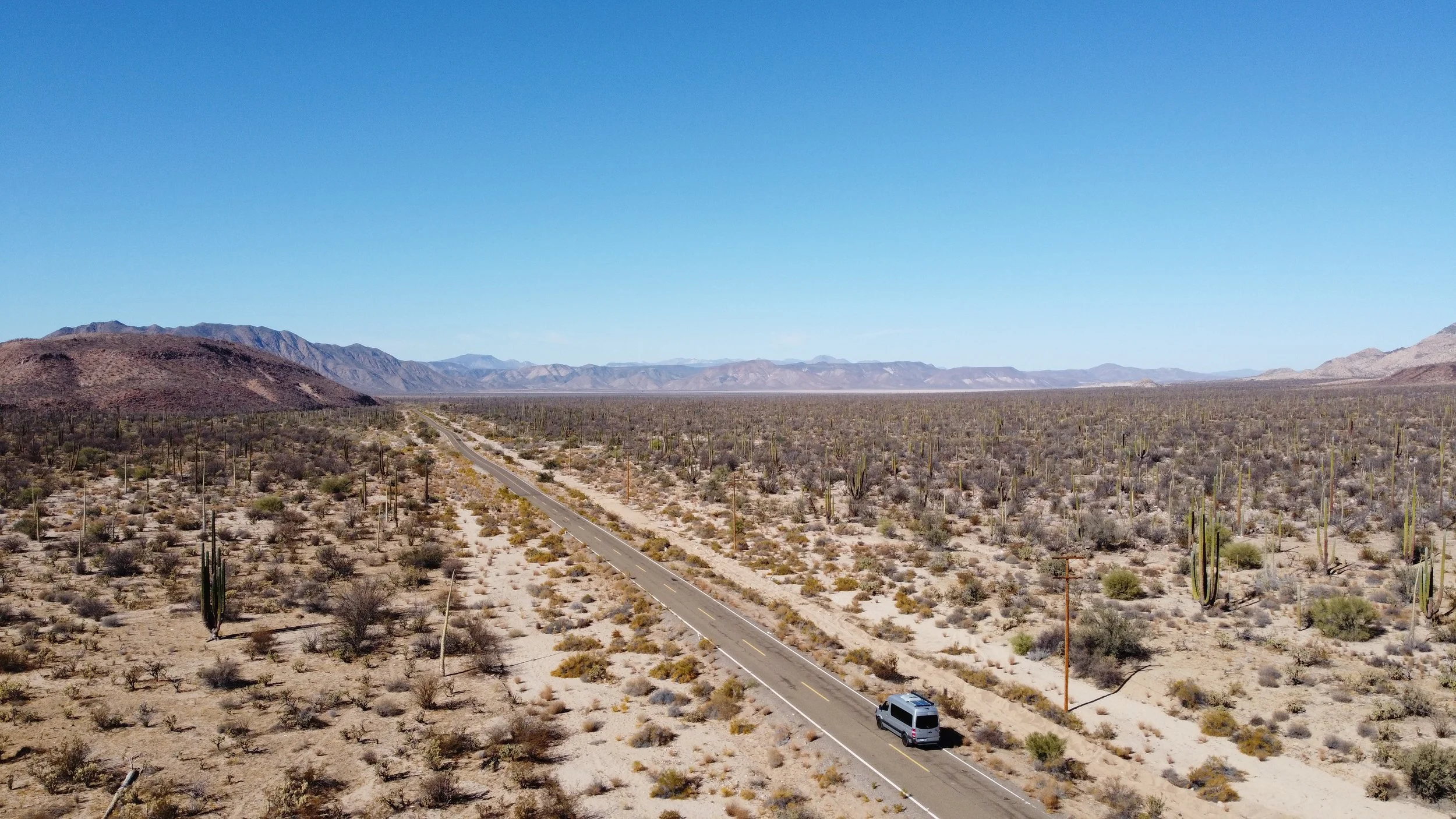
Baja is made up of two states, Baja California and Baja California Sur, and the drive from the U.S. border to the southern tip of the peninsula is roughly 1,000 miles, depending on your route. It's an incredible road trip, but it's not one we recommend rushing. You'll pass through mountain ranges, vast desert landscapes, small agricultural communities, and stretches of coastline that look almost untouched. There are also long sections of highway where services are limited, which makes planning especially important when you're traveling with an RV.
Highway 1 is the primary north-south route through much of the peninsula, and while it's paved, road conditions can be very different from what you're accustomed to in the United States. Some sections are narrow, with little or no shoulder, and you'll encounter large trucks traveling in the opposite direction. Potholes, construction, and animals near the roadway are additional reasons to take your time. We strongly recommend driving during daylight hours, both for safety and because you'll miss some pretty spectacular scenery if you're traveling after dark.
One of the first things we learned during our initial week in Baja was the importance of having reliable navigation. Before crossing the border, download offline maps through Google Maps for the areas you'll be traveling. Cell service can be inconsistent throughout the peninsula, particularly in remote regions, and you don't want to rely on having an internet connection every time you need directions. We've also found that Google Maps can occasionally suggest some questionable dirt-road shortcuts, so it's worth double-checking unfamiliar routes before committing to them with your RV. Waze can be another helpful navigation tool when you have service.
We also recommend keeping an eye on your fuel level, especially when traveling between smaller towns. Gas stations are easy to find in larger communities, but there are stretches of highway where services are few and far between. Rather than waiting until you're nearly empty, make a habit of filling up when you have the opportunity, particularly before heading into a remote area.
If you're traveling with a larger RV, take a little extra time to research your campground access and driving routes. Just because a road appears on a map doesn't necessarily mean it's appropriate for a big rig, and some of Baja's most beautiful camping areas require navigating sandy or uneven roads. Knowing your vehicle's capabilities and being realistic about where you can safely travel will save you a lot of unnecessary stress.
Come Prepared, but Don’t Overpack
One of the questions we hear from first-time Baja travelers is what they should bring from home. The good news is that many everyday essentials are readily available in Mexico, especially in larger communities. You'll find grocery stores, pharmacies, hardware stores, and plenty of opportunities to stock up along the way, so there's no reason to pack your RV as though you're heading somewhere completely disconnected from civilization.
That said, there are some things worth having on hand, particularly when it comes to RV maintenance and personal necessities. We recommend bringing basic tools, commonly needed spare parts, any specialty items for your rig, and enough prescription medication for the duration of your trip. You'll also want to think about tire maintenance and any equipment you rely on for camping without hookups. If you know a particular part would be difficult to replace while traveling, it's worth bringing a spare. (Once you’re down in the Cerritos area, you’re not too far from La Paz or Cabo; there is access to more hard-to-find things in those bigger cities.)
Before leaving home, contact your cell provider to understand what coverage you'll have in Mexico and whether you need to activate an international plan. We also recommend checking with your bank about international transactions, making sure you have access to pesos, and sharing your general travel plans with someone back home. These are all relatively simple things to take care of before your trip, but they can make a big difference once you're on the road.
Go with the Flow & Embrace Slow Travel
One of the things we've always loved most about Baja is that life here tends to move at a slower pace. Maybe it's the sunshine, the beautiful beaches, or the fact that you can't always count on having a strong cell signal, but there's something about traveling the peninsula that encourages you to disconnect from your usual routine and enjoy what's happening right in front of you.
This was one of the first pieces of advice we shared when we started writing about our Baja travels, and it still holds true today. Give yourself enough time to explore the communities you're passing through, try the local food, and enjoy the places you discover along the way. It's easy to get caught up in planning the perfect itinerary, especially when you're trying to fit a long list of destinations into a limited amount of time, but Baja is a place that deserves more than a quick drive from one stop to the next.
That doesn't mean you shouldn't have a plan. Knowing where you'll find fuel, water, groceries, and a safe place to camp is especially important when you're traveling in an RV. But once you've taken care of the practical details, leave yourself some flexibility. A little less structure can go a long way toward making the experience more enjoyable.
Learn Some Spanish Before You Go
You don't need to speak fluent Spanish to travel Baja, but learning some basics before your trip is one of the best things you can do to make your experience easier and more meaningful. While English is spoken in many tourist destinations, you'll encounter plenty of communities where it isn't, and being able to communicate even a little in Spanish can make everyday interactions much smoother.
Start with simple greetings, numbers, and phrases you'll use regularly when ordering food, shopping, asking for directions, or speaking with campground staff. Downloading a translation app that works offline is also helpful, particularly when you need to communicate something more complicated. In our experience, locals appreciate travelers who make an effort to speak their language, even if the pronunciation isn't perfect.
More importantly, learning Spanish is a way of showing respect for the country you're visiting. You're the guest, after all, and making an effort to communicate in the local language is a small but meaningful way to connect with the people who call Baja home.
Support the Local Economy
If there's one thing we encourage everyone traveling Baja to do, it's to support the local communities that make this peninsula so special. Eat at the neighborhood taquería, buy fresh produce from a roadside stand, pick up baked goods from a local vendor, and book experiences with guides who know the area. Not only are these often some of the most memorable parts of traveling Mexico, but your spending also directly supports the people and families who live here.
We also encourage travelers to be thoughtful about bargaining. While negotiating prices may be common in certain situations, there's a difference between a fair exchange and trying to save a few dollars at someone else's expense. It's something we've felt strongly about since our earliest trips to Baja, and it's worth remembering that the money you spend while traveling can have a meaningful impact on the communities you're visiting.
Baja has an incredible food culture, and exploring it is one of our favorite parts of being here. Don't limit yourself to the restaurants that appear at the top of a Google search or the places that cater primarily to tourists. Some of the best meals you'll find are served at small, family-run businesses, and supporting them is a wonderful way to experience more of the local culture.
Respect the Land, the People & the Culture
Baja's natural beauty is one of its greatest attractions, but it's also something that deserves our care and respect. The peninsula is home to fragile desert ecosystems, extraordinary marine life, and miles of coastline that continue to attract more visitors each year. Unfortunately, waste management and access to proper disposal facilities can be challenging in some areas, making responsible camping practices especially important.
If you're traveling by RV, always dispose of your gray and black water at appropriate facilities. Never dump wastewater directly onto the ground, even if someone tells you it's acceptable. Pack out your trash, respect local restrictions, and leave your campsite in better condition than you found it. These aren't complicated expectations, but they make a real difference in protecting the places we all enjoy.
Respecting Baja also means respecting the people who live here. Life in Mexico isn't always going to operate the way it does in the United States or Canada, and that's part of the experience of traveling somewhere different. Be patient, be courteous, and remember that you're a visitor in someone else's community. Rather than expecting everything to work exactly the way it does back home, take the opportunity to learn from the culture around you.
We've always believed that being a responsible traveler means doing your research, approaching new places with an open mind, and being considerate of the people and environments you encounter. You don't have to have all the answers, but you should make the effort. Honor the places you visit and the people who welcome you into them.
Planning Your Baja Road Trip?
There's a reason Baja has become such an important part of our family's story. What began as a road trip in 2020 eventually led us to put down roots in Baja California Sur and open Camp Cerritos, our RV campground in Playa Los Cerritos. After years of exploring the peninsula and experiencing RV travel firsthand, we wanted to create a place where travelers could feel comfortable settling in, connecting with others, and enjoying everything this beautiful corner of Mexico has to offer.
Camp Cerritos offers full-hookup RV sites, dry camping options, bathrooms, heated open-air showers, a communal kitchen, and shared spaces for relaxing or working remotely. We're within walking distance of Cerritos Beach, local restaurants, and groceries, and just a short drive from Todos Santos. If your travels bring you down to Baja Sur, we'd love to have you stay with us. You can check availability and book your campsite here, or read more about the surrounding area in our Cerritos Beach and El Pescadero travel guide.
And if you're still in the planning stages, we've put together a comprehensive Guidebook to RVing Baja California, Mexico, covering the entire peninsula with travel planning resources, destination recommendations, camping information, and practical advice we've gathered over the years. It's designed to help take some of the guesswork out of planning your own Baja adventure.
You can also explore more of our Baja Travel Guides for additional information on destinations, road trips, and experiences throughout the peninsula.
Our biggest piece of advice is simple: do your research, come prepared, and keep an open mind. Baja is an incredible place to explore by RV, and the more time you give yourself to experience it, the more you'll begin to understand why we love it so much.
Last updated: October 2026. Immigration, customs, insurance, and vehicle requirements can change. Always confirm current requirements with the appropriate authorities before traveling.